All-on-X Dental Implants in Bridgeville, PA
All-on-X Dental Implants in Bridgeville, PA
If your teeth shift when you eat, your dentures float around, or you've trained yourself to smile with your lips closed, there's a fix for you that doesn't budge.
All-on-X replaces a whole arch of missing or failing teeth with a fixed set anchored on just a few implants. Nothing comes out at night, nothing needs adhesive, and once you've healed you can eat, talk, and laugh without thinking about it.
Dr. DiBartola and the team at DiBartola Dental in Bridgeville help folks all over the South Hills and greater Pittsburgh. Plenty of people walk in nervous, often after years away from a dentist, and not one word of judgment comes their way. The first step is just a conversation. Call (412) 221-9440 for a free consultation and a straight answer about where you stand.
All-On-X Dental Implants at a Glance
- What is it?: A fixed full arch of replacement teeth anchored on just a few implants — nothing to soak, nothing to slip, nothing to take out at night.
- Same-day teeth: Most patients leave surgery day with a temporary arch already in place. The permanent set comes after your jaw has fully healed around the implants.
- Your consultation: We review your bone, gums, and health history, then give you a real cost figure for your specific case — not a ballpark pulled from thin air.
- Sedation is available: If anxiety has kept you away from the dentist, we offer both oral conscious and IV sedation so you can get through the procedure comfortably.
- Been turned away before?: All-on-X uses angled implants to work with the bone you have, which is why some patients we treat were told they weren't candidates elsewhere.
What to Know First
- What is it?: A fixed full arch of replacement teeth anchored on just a few implants — nothing to soak, nothing to slip, nothing to take out at night.
- Same-day teeth: Most patients leave surgery day with a temporary arch already in place. The permanent set comes after your jaw has fully healed around the implants.
- Your consultation: We review your bone, gums, and health history, then give you a real cost figure for your specific case — not a ballpark pulled from thin air.
- Sedation is available: If anxiety has kept you away from the dentist, we offer both oral conscious and IV sedation so you can get through the procedure comfortably.
- Been turned away before?: All-on-X uses angled implants to work with the bone you have, which is why some patients we treat were told they weren't candidates elsewhere.
How All-on-X Works
The process is straightforward. Here's what to expect from start to finish.
- Imaging and planning. We take detailed 3D imaging to see your bone and map out the case. Dr. DiBartola plans and sequences each one personally.
- A real conversation about the plan. You'll talk it through with us, not get handed a brochure. Nothing moves forward until it makes sense to you.
- Placement day. The implants go into the jawbone in one surgical visit, and a temporary arch goes on the same day. You walk out with teeth.
- Your final arch. Once your jaw has healed around the implants, you come back for the permanent set.
People who've avoided the dentist for years are often surprised how doable the day feels, especially with sedation. If fear has been your sticking point, read how sedation works at our office before your consult.
Why People Choose Full-Arch Implants
- They stay put. No more planning your day around teeth that might slip.
- You eat what you've been missing. Once you've finished recovering from the procedure, steak, apples, and corn on the cob are back on the table.
- They protect your jaw. Implants stimulate the bone the way natural roots do, helping slow bone loss.
- Your face keeps its shape. A stable arch supports your features instead of letting them sink inward.
- They're easy to live with. You brush them like your own teeth.
- They're built for the long haul. With good care, this is a solution you keep.
Are You a Good Candidate?
Most people looking into All-on-X recognize themselves in at least one of these:
- Most or all of your teeth are already gone.
- Several teeth are failing or infected, or you've been told they need to come out.
- You've worn dentures for years and you're done with them moving.
- You have some bone loss but want to steer clear of extensive bone grafting.
That last one surprises a lot of people. All-on-X angles the implants to find your strongest available bone, which is why it works for some patients turned away elsewhere.
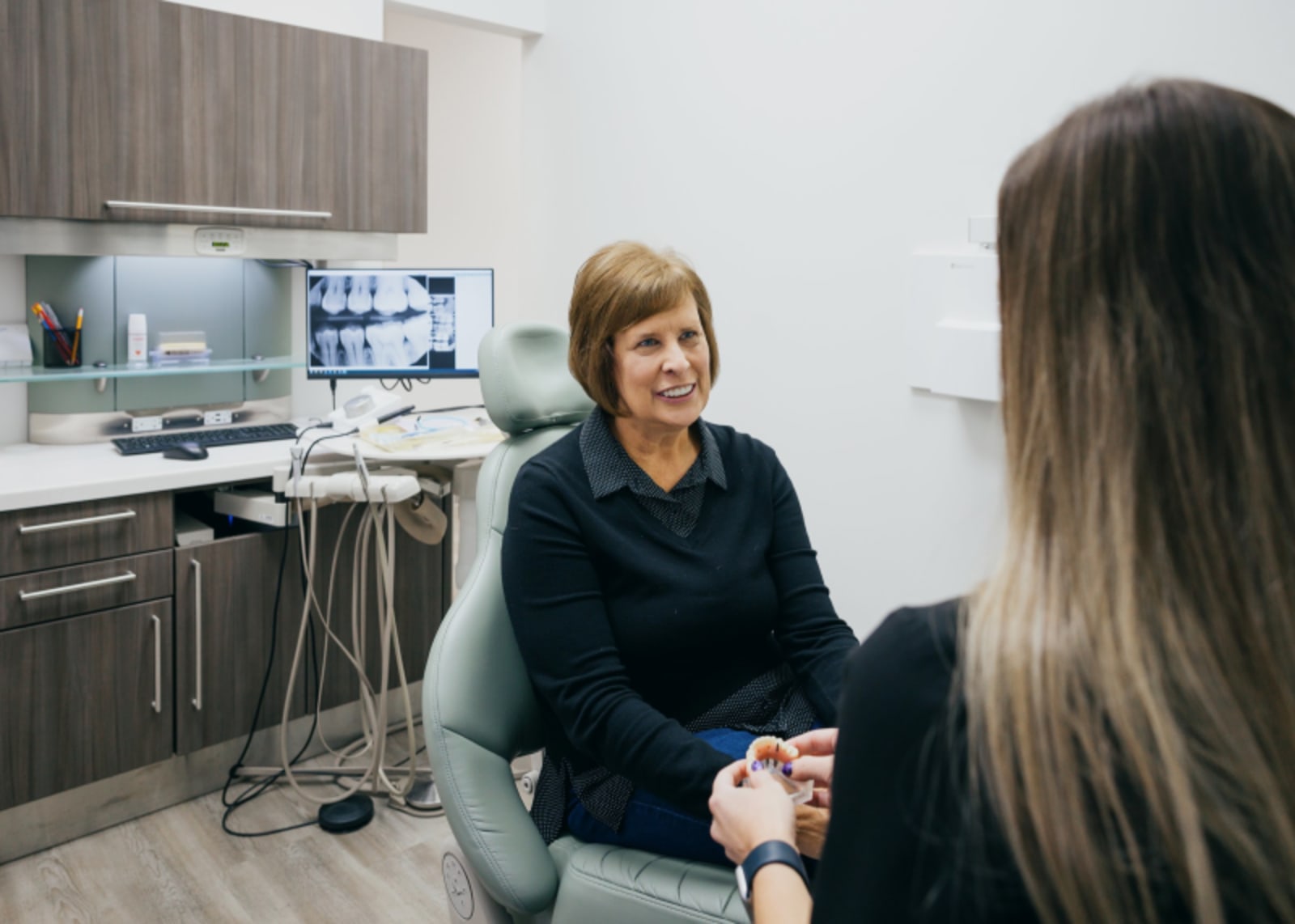
It isn't right for everyone, and we'll tell you when it isn't. If you've only got one or two teeth to replace, a single implant or a dental bridge may serve you better. At your consult we check bone density, gum health, and overall health to confirm what fits.
Your Timeline, Visit by Visit
Most cases move through four stages. Here's what each one looks like.
- Consultation and planning. Usually a single visit for imaging, your plan, and a cost figure.
- Surgery day. One appointment, with most patients back to their routine within a few days.
- Healing. Over the next several months, your jawbone fuses to the implants. How long depends on your bone density and overall health.
- Final arch. Once we confirm the implants have integrated, you return for the permanent set.
Wondering where patients end up on the other side of all-on-x implant treatment? Our smile gallery shows real, finished results.
Preparing and Healing After Getting All-on-X Implants
There's not much to do beforehand beyond showing up for your pre-surgery image scans and being honest about your health history and medications. We'll send specific instructions ahead of surgery day, including what to eat and how to line up a ride home if you're being sedated.
Recovery take some time, but is manageable. The first two or three days are usually the most uncomfortable. Expect some swelling, soreness, and a diet of soft foods like soups, mashed potatoes, and scrambled eggs. After that:
- You'll come in for follow-up visits so we can check how things are healing.
- You'll ease back to normal eating as everything settles.
Those follow-ups matter. We stay in touch the whole way through, so if something feels off, you've got someone to call.
Cost, Financing, and Insurance
All-on-X is a meaningful investment, and the cost varies. Your plan depends on your bone structure, how many teeth need attention, and any prep work involved, so we won't toss out a number before we've looked at your actual situation. The consultation is where we build a clear picture of what your case involves and what it'll run.
Financing is available to spread that out, so you're not staring down one overwhelming figure. We'll walk you through the options when you come in.
Full-arch treatment usually isn't covered as a single line item, but some pieces may qualify for partial benefits depending on your plan. We'll go through your coverage together, looking at:
- Which parts of your treatment your plan may chip in toward
- How to get the most out of the benefits you already have
- What financing can cover if there's a gap left over
Why Patients Across the South Hills Trust Us
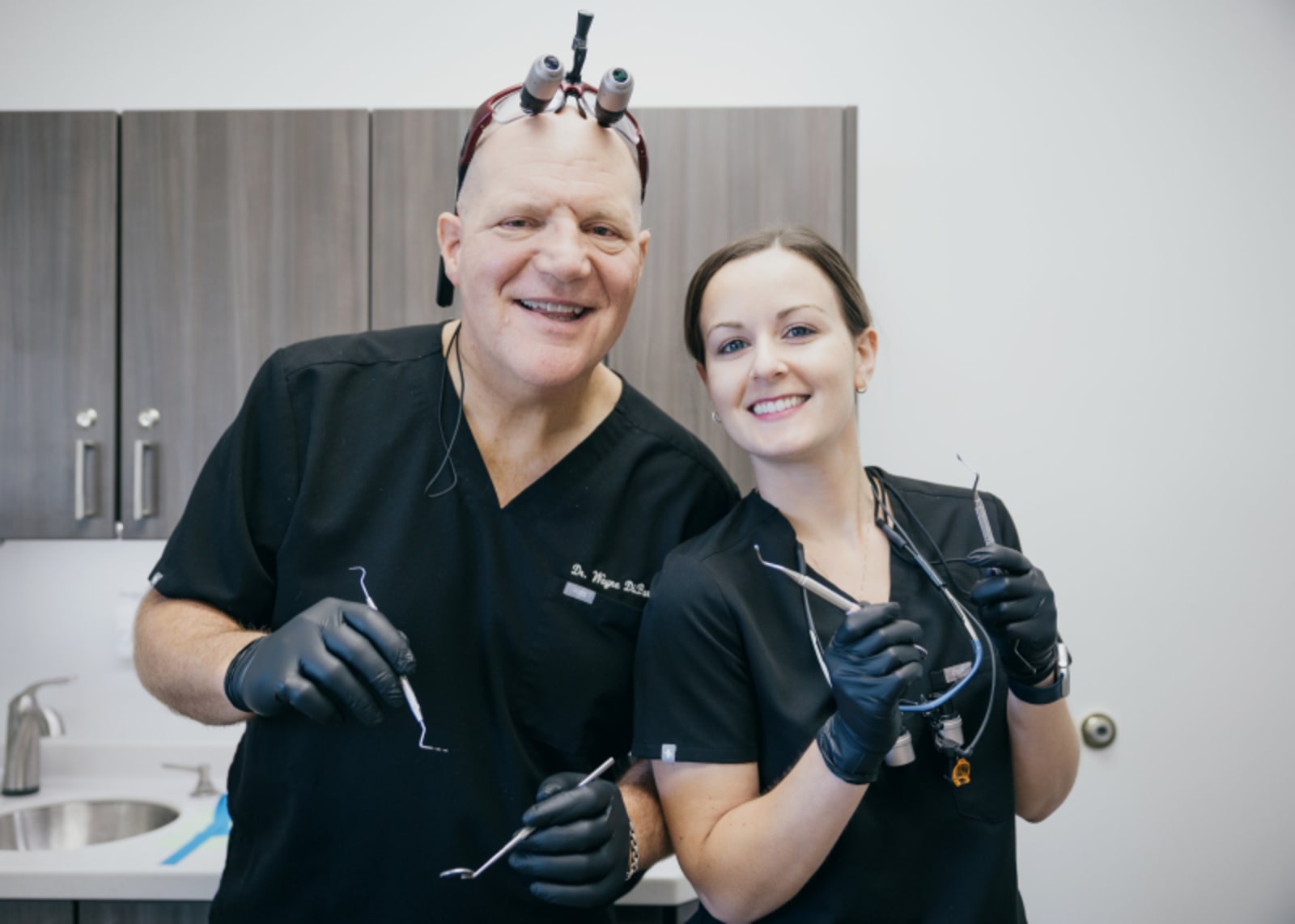
There's a real difference between a practice that knows your name and one that treats you like a chart number. We're an independent Bridgeville office, not a corporate implant chain, and we've built genuine depth in full-arch cases.
- Deep implant training. Dr. DiBartola has trained in implants since 2002, including the Resnik Implant Institute, the Alabama Institute of Implantology, and a Florida University implant residency.
- Real sedation expertise. His IV sedation training came from Montefiore in New York, which matters for an anxious patient facing a longer procedure.
- An engineer's eye for planning. His engineering degree from Pitt feeds directly into how these arches get designed and sequenced.
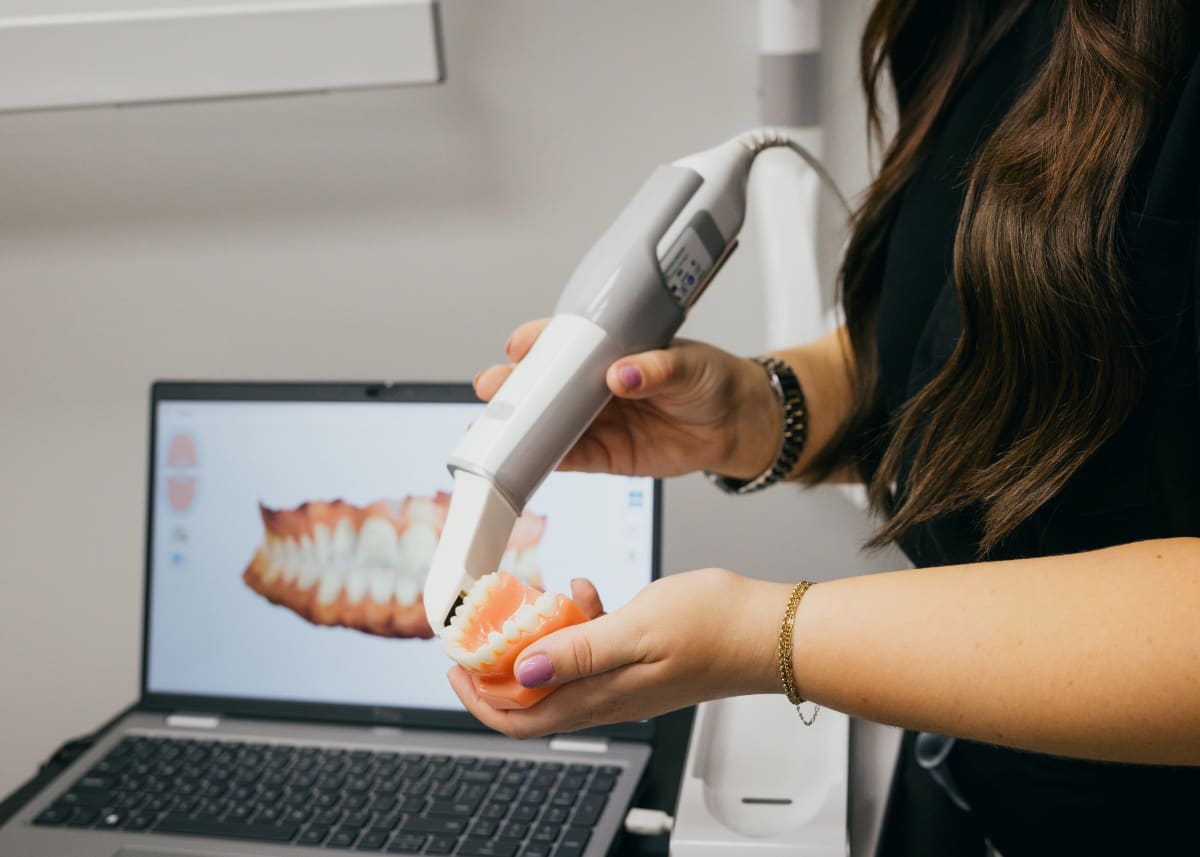
- Modern technology. In-house 3D printing and same-day capabilities let us plan and deliver efficiently.
Read more on our what makes us different page.
All-on-X vs. Traditional Dentures
The core difference is stability. Traditional dentures rest on your gums and rely on suction or adhesive to stay put. For many people they work fine day to day, but they can shift while you eat or talk, and over time they tend to need refitting as your jaw changes shape.
That shape change happens because dentures don't stimulate the underlying bone the way natural roots do, so the jaw slowly shrinks over time, which affects both fit and facial appearance. They're a legitimate option and often more accessible on the front end, and for some patients they genuinely are the right call.
All-on-X is anchored directly into the jawbone, so it doesn't move. Not while you're eating, not while you're laughing, not ever. There's no adhesive, no nightly soak, and no moment where you're thinking about your teeth instead of the conversation you're in. Because the implants act like roots, they help preserve the bone you have, which keeps your jaw and facial structure more stable over time.
You brush and floss them the way you would natural teeth. For patients who've spent years managing dentures and are ready for something that just works, it's usually a significant quality-of-life change. We'll walk through both options honestly at your consult, including cost, so you can make the call that actually fits your life.
Frequently Asked Questions
Do I need bone grafting first?
Not always, and this is one of the reasons All-on-X appeals to patients who've been told they don't have enough bone for traditional implants. The angled placement technique is specifically designed to work with the bone you have, reaching denser areas that straight implants can't access. In some cases a small amount of grafting still makes sense, and if that's true for you, we'll explain exactly why and what it involves before anything moves forward.
How long do All-on-X implants last?
With proper care, All-on-X implants are built to last decades. The implants themselves are titanium and fuse directly to your jawbone, so they're not going anywhere. The arch on top, the part that looks and functions like teeth, may eventually need to be refreshed depending on wear, but the foundation underneath is meant to be permanent. Good home care and regular check-ins with us go a long way toward protecting that investment.
Can I eat normally afterward?
During the healing period, typically the first few months while your jaw is fusing to the implants, you'll stick to softer foods. Think soups, eggs, mashed potatoes, fish. It's a temporary adjustment, not a permanent lifestyle. Once your implants have fully integrated and your permanent arch is in place, most patients eat without the restrictions that came with dentures. Steak, apples, corn on the cob. Things a lot of our patients hadn't enjoyed in years.
What if I've been told I'm not a candidate somewhere else?
It's worth getting a second opinion before you give up on implants entirely. Candidacy decisions depend heavily on the training and technology available at a given practice. Dr. DiBartola has been placing implants since 2002 and trained at some of the most respected implant programs in the country. We've evaluated patients who were turned away elsewhere and found a clear path forward. We'll give you an honest read. If it's not the right fit, we'll tell you that too.
Will I be awake during the procedure?
Only if you want to be. We offer both oral conscious sedation and IV sedation, so patients who are anxious, or who simply don't want to be aware of what's happening, have real options. Dr. DiBartola received his IV sedation training at Montefiore in New York and holds a Restricted I permit, which means this isn't something we offer casually. Most patients who choose sedation tell us afterward that the procedure felt like nothing. We'll talk through which level of sedation makes sense for you at your consultation.
Ready to Find Out If All-on-X Is Right for You?
A lot of people who call us have been sitting on this decision for a while, sometimes years. They've been managing with dentures that don't fit right, avoiding certain foods, or just quietly dreading every social situation where their teeth might become an issue. If that sounds familiar, you're not alone, and you won't hear a word of judgment from us.
A consultation at our Bridgeville office is just a conversation. No obligation, no pressure, no hard sell. Dr. DiBartola will look at your bone, your gums, and your health history and give you a straight answer about whether All-on-X is the right fit. If it isn't, he'll tell you that too, along with what might serve you better. You'll leave with a real picture of your options and a cost figure specific to your case, not a vague range pulled from a brochure.
When you're ready to take that first step, call us at (412) 221-9440. We're at 3249 Washington Pike, Suite 1107, in Bridgeville, open Monday through Thursday.
More Information Coming Soon...
We can’t wait to meet you!
Call 412-221-9440 or request an appointment online to set up your first visit. We’ll be in touch soon.